The Song Was Never the Product — Storm, GENER8ION and the Power of Interpretation
A catchy track earns attention. Interpretation earns the world's.
Strip the choreography out of Storm and listen again.
What remains is a strong piece of electronic music from GENER8ION, the multimedia project of French producer Surkin, with a verse from Yung Lean. It is a good track. By the numbers it is not a phenomenon: it peaked at number 12 in Sweden and lower on the other charts it reached (Wikipedia).
Now add the film.
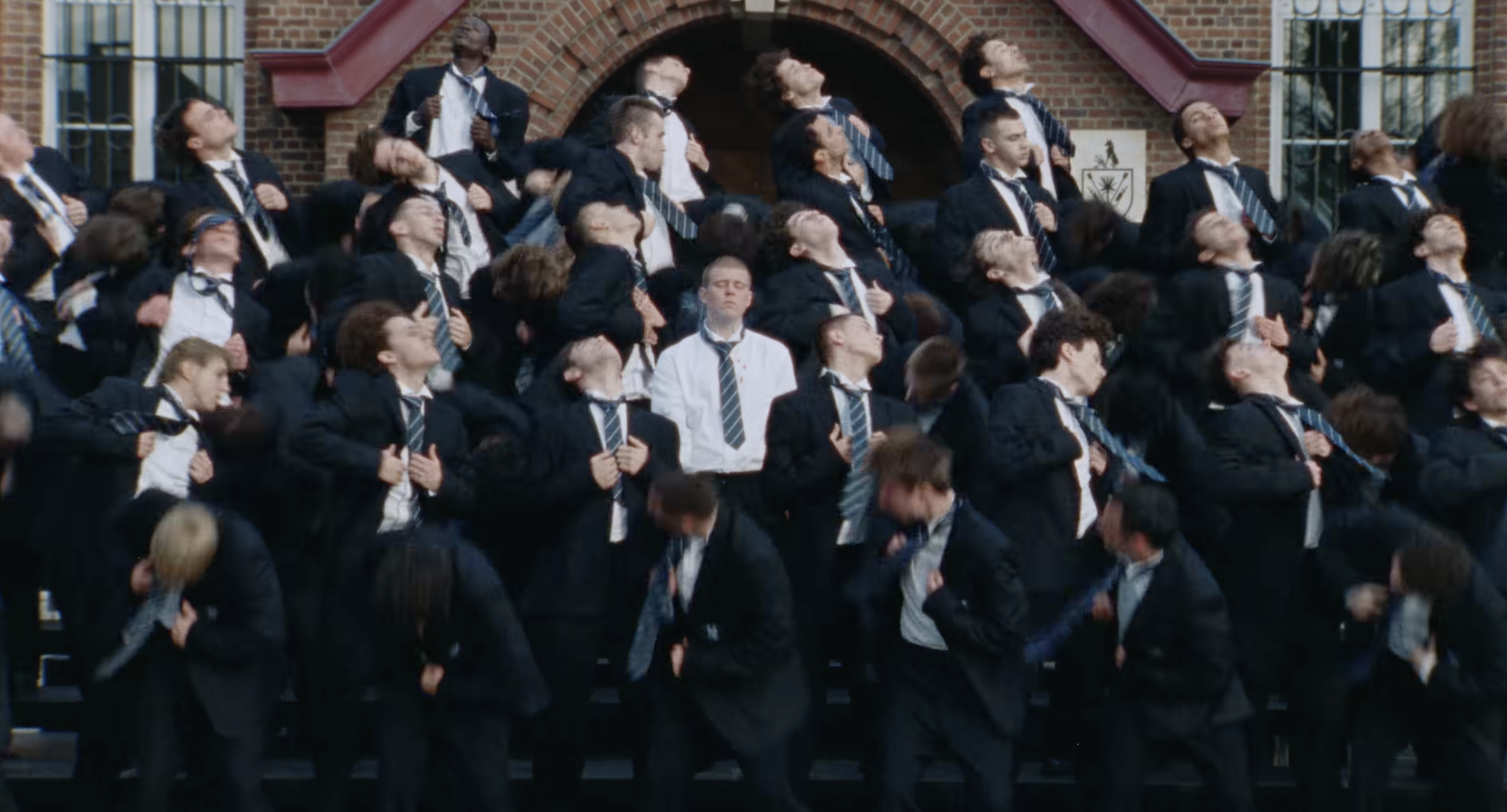
Released in April 2026, the Storm short film was directed by Romain Gavras and choreographed by Damien Jalet (Wikipedia). It follows a fictional British boarding school class of 2034. In the first part, a disruptive student, played by Yung Lean, drives the room into disorder. In the second, the film turns euphoric: a large ensemble moves as one body, and chaos becomes unity.
Within weeks it had millions of views. It went on to earn 2026 MTV VMA nominations for Video of the Year, Best Direction and Best Choreography (Z107.1).
My view, as someone who has spent a career watching what makes organizations succeed: the song opened the door, and the choreography is what people walked through.
The composer writes the score. Someone has to interpret it.
Damien Jalet did not write a note of Storm. He decided what the music looks like when dozens of performers give it a body. That is interpretation, and it is the same job a conductor does with a symphony the composer finished two centuries ago.
The score is fixed. The performance is not. Two orchestras play the same piece and you leave with different evenings.
Your product or service is the score. Your people are the performance.
Five things Storm teaches leaders
Interpretation is a role, and someone must own it. Great music without an interpreter is a file on a server. Who in your organization decides what your strategy looks like when it meets a customer?
Precision is what makes expression possible. Synchronised movement at that scale is not spontaneity. It is rehearsal: repetition until the discipline disappears and only the feeling shows. Leaders who skip the rehearsal wonder why the performance is ragged.
The arc from disorder to unity is the leadership arc. The film begins with a room that will not listen and ends with a room that moves together. Nobody got there by being told. They were led there, by a clear idea and a shared rhythm.
The people at the point of contact are your choreographers. The support agent, the account manager, the nurse, the front-desk receptionist. They interpret your promise hundreds of times a day, and the customer experiences their version of it, not yours.
Credit the interpreters. Jalet's name is on this work, and the work is better known because of it. In most companies the people who made the difference are invisible in the announcement.
One honest caveat
Choreography did not do this alone. Gavras's direction, Yung Lean's performance and the dancers themselves all carry the film, and no single element explains a viral moment. That is the point. The score, the conductor and the orchestra work together or the evening falls flat.
But if you had to remove one, the song would survive without the choreography. The phenomenon would not.
Conduct the performance
You can have the best product in your market and still lose to a competitor whose people interpret theirs better. Strategy is the score. Execution is the interpretation. And interpretation belongs to people, which means it belongs to leaders who develop them.
Where in your organization is a good song waiting for a choreographer?
To see which of the six movements is weakest in your leadership, take the Conductor Score.